


Self-image and confidence
Lion
Lion wants to be brave and dares a lot. But even a brave lion gets scared sometimes. He teaches children that you may show your talents and may also say what you cannot do yet.
Jungle Buddies is not a collection of exercises. It is a learning line that grows with a child, and that looks the same in the classroom, in therapy and at home.
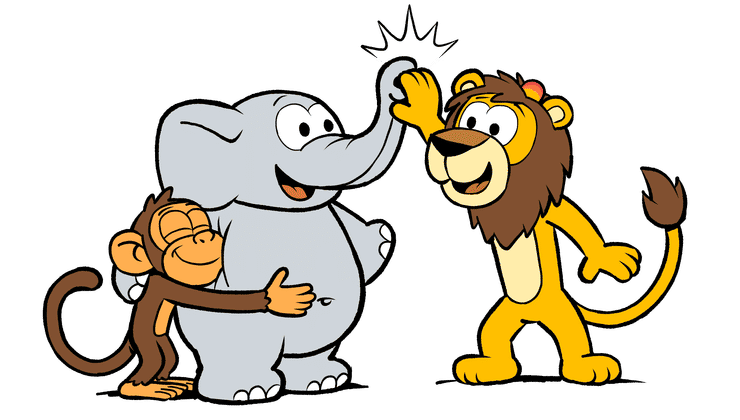
The idea
Young children feel far more than they can say. As long as the words are missing, tension comes out as behaviour. Starting by unlearning behaviour therefore rarely works. Starting by naming does.
Each Junglemaatje stands for one part of that process. The characters have talents and pitfalls, just like the children themselves. That keeps the threshold low: it is about Crocodile getting angry, not about you getting angry.
The children took to the characters straight away and keep comparing themselves to them. It comes alive from the very first moment.Eveline, second year of nursery school
The characters
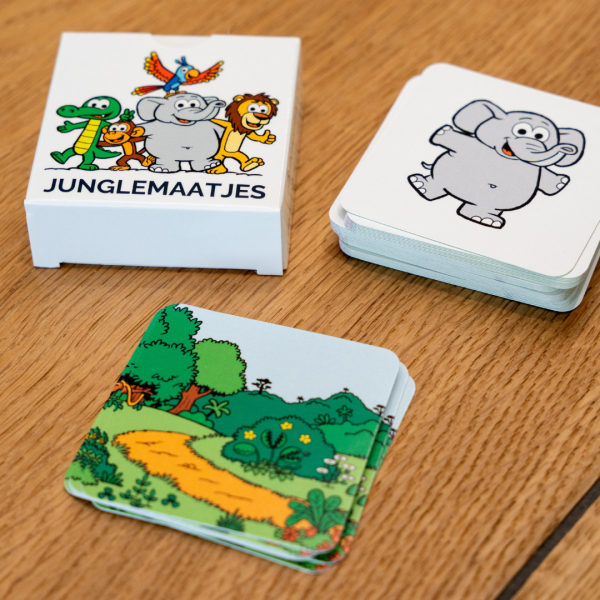
Five characters in the classroom. The therapy box adds Snake.
Lion wants to be brave and dares a lot. But even a brave lion gets scared sometimes. He teaches children that you may show your talents and may also say what you cannot do yet.

Crocodile feels everything very hard and very fast. He stands for the moments when a feeling becomes bigger than the child itself, and for the ways back to calm.

Elephant is slow, warm and calm. He brings the breathing exercises, the massages and the quiet moments that carry a busy day.

Monkey wants to play, always and with everyone. Through him children learn rules, turn-taking and tuning in to what someone else needs.

Parrot loves to talk, sometimes too much and sometimes not clearly enough. He stands for listening, waiting your turn and saying what you really mean.
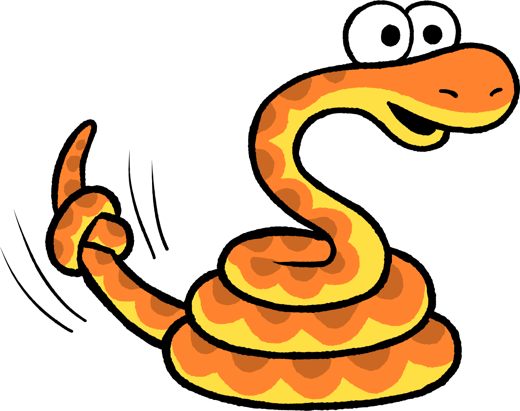
Snake wants to belong but tends to go about it the wrong way. He teases and overdoes it. Every child recognises itself in Snake now and then, which makes talking about difficult behaviour safer.
The themes
The same themes, with a higher bar each year. Repetition is not a weakness of the method, it is the working principle.
What is my place in the group? Children learn that they belong, and what they themselves do to make a group work.
How do I say what I mean? From non-verbal signals to listening and waiting your turn.
From the four basic emotions to degrees and mixtures. Naming comes first, regulating follows.
Rules, roles and tuning in to what someone else needs. Play is practice in miniature.
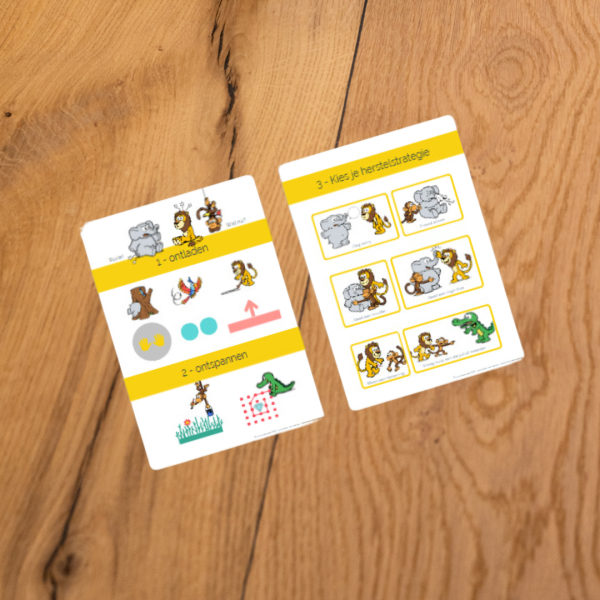
Taking another perspective during a conflict, and concrete repair strategies children can use themselves.
Knowing your own talents and your own limits, and daring to try what does not work yet.
The build-up

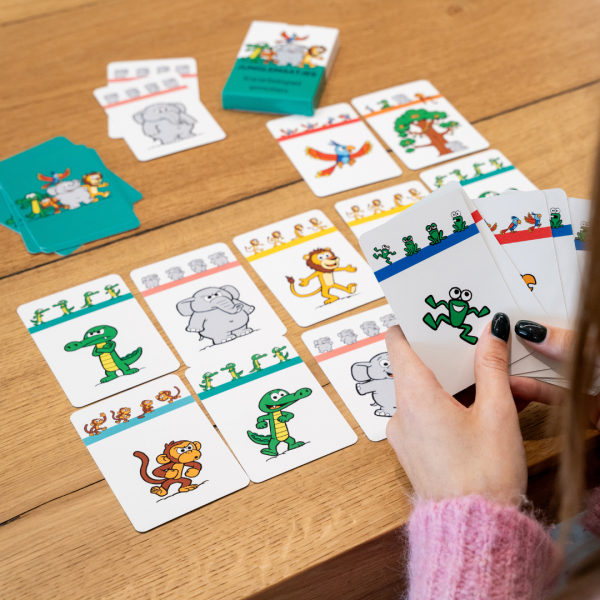
Meeting the five characters. Five themes about the individual: me and the group, I can do this, I feel, I play.

The six social and emotional themes begin. Stories, games and exercises deepen what they already know.

The same themes, a higher bar. More cooperative formats, station work and individual processing.

Three large themes: feeling good, standing strong, stronger together. With extra attention for self-reflection.
Grounding
The toddler and nursery years are a crucial phase for the foundations of social and emotional development. Developing a sense of self, building enough confidence and learning to handle emotions is a step-by-step learning process.
That is why Jungle Buddies combines material for the child with training for the adult. A theoretical frame about the development of the young child makes clear what is age-appropriate, and therefore what you may expect. And above all what you may not. With that anchor you look at behaviour differently, and support becomes targeted instead of merely well meant.
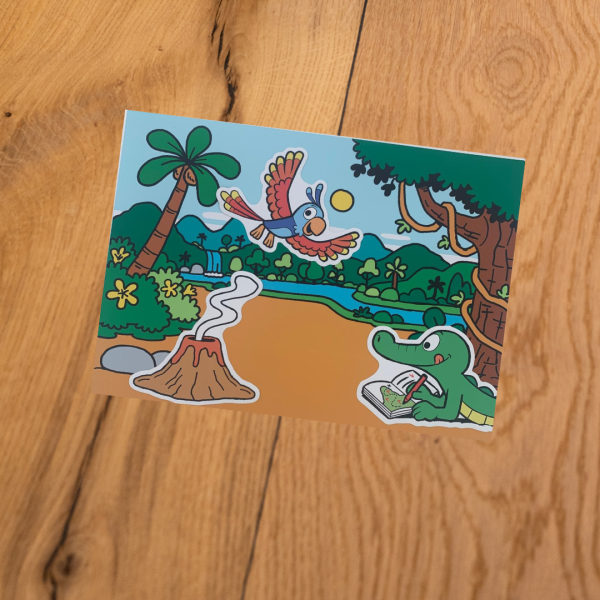
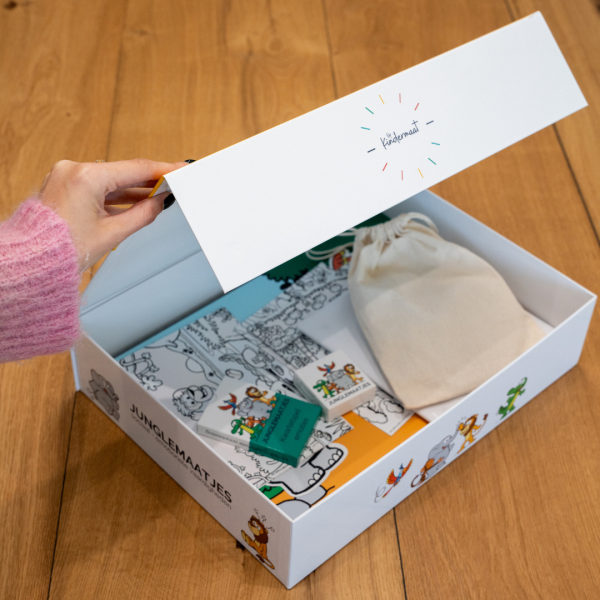
In pictures



Next step
A free sample pack, digital or by post. Your choice.